
What the «In-Between» State Is
There is a moment in life that is hard to name with a single word. Something has already ended—a job, a relationship, a place of residence, a certain way of being yourself—but the new has not yet begun. Between «no longer» and «not yet,» there is a space that a person sometimes experiences as emptiness, sometimes as freedom, but more often—as a strange combination of both feelings at once.
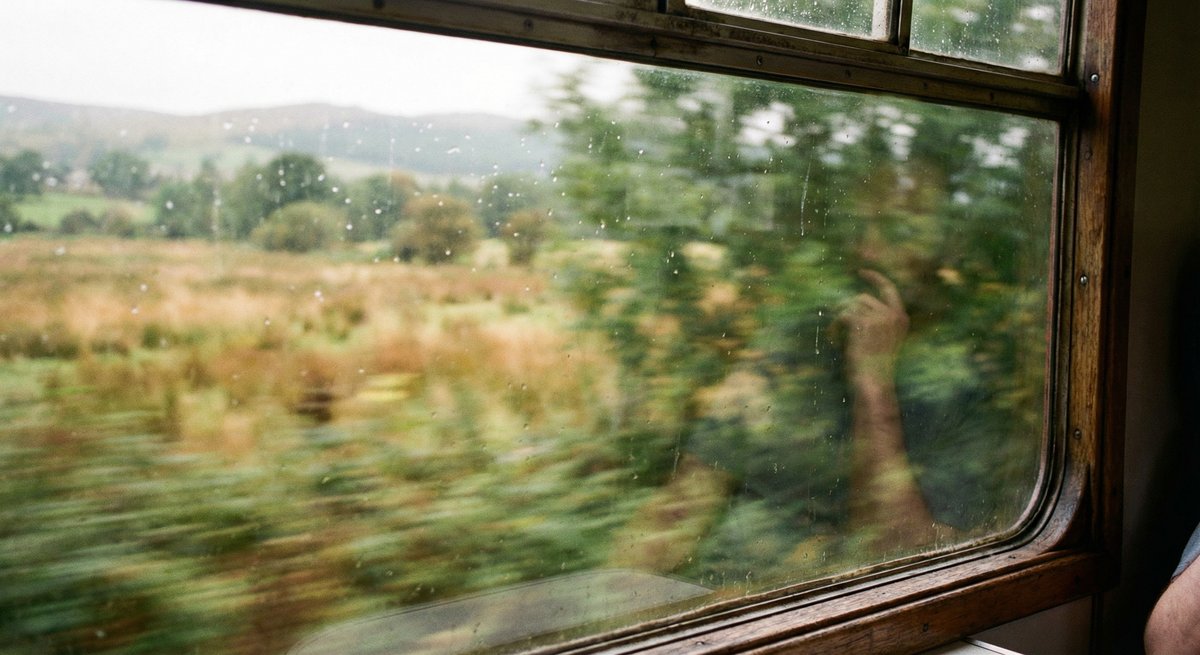
This state is well known to many, but rarely discussed directly. If a person talks about something completed—there are words, a plot, conversational partners. If they talk about something new—there is also something to tell. But it is difficult to talk about the time in the middle. It is as if there is no event, no turning point, no clear answer to the question «so how are you doing now?».
The «in-between» state can be short—a few weeks between jobs, a month after a breakup. Or it can be prolonged: years of uncertainty regarding direction, a long search for oneself after a major change, a time when a person already knows what they do not want, but does not yet know what they do want. In both cases, this is a real experience that should be viewed not as an obstacle to «real» life, but as a part of it.
Why Uncertainty Is So Hard to Bear
The human brain is evolutionarily wired for predictability. A clear plan, an understood sequence of steps, a known future—all this reduces anxiety and gives a sense of control. Uncertainty, on the contrary, keeps the nervous system in a state of anticipation. Not danger—but not safety either. Something might happen, but what exactly is unclear. And the brain, lacking a specific threat, sometimes reacts to this state just as exhaustingly as it would to a real problem.
There is another aspect: our culture does not handle the «in-between» well. People are expected to have a clear answer: where you work, who you live with, what you are planning. When there is no answer, social discomfort arises. For some, it is just an awkward pause in the conversation. For others, it is a constant reminder that they «have not yet decided,» «are still searching»—and almost have to apologize for it.
Therefore, uncertainty is often experienced doubly: there is the real difficulty of the «in-between» state—and there is external pressure saying that this state is a problem that needs to be solved as quickly as possible. The combination of internal anxiety and external pressure makes this time particularly difficult, even if objectively nothing critical is happening.
When One Chapter Ends and Another Has Not Begun
The first days or weeks after something has ended often pass in a strange state of numbness. The person functions, does routine tasks, answers messages. But there is a feeling as if they are walking slightly to the side of their own life—looking at it, but not entirely in it.
Over time, this numbness can transition into something more acute: the realization that the usual rhythm is gone and nothing has taken its place. There are no deadlines organizing the week. No person to wait for in the evening. No project around which plans were built. The structure that previously felt like a limitation suddenly turns out to be what held the day together and gave it shape.
In this state, questions often arise to which there are no ready answers. Who am I outside of what has ended? What do I really want, if all expectations placed on me are removed? These questions can be productive—but only if there is a willingness to live with them for a while, without demanding an immediate answer.
What People Usually Do With Uncertainty—and What Comes of It
The most common reaction to the «in-between» state is trying to get out of it as quickly as possible. To engage in something that will provide a new structure: find any job, start a new project, fill the schedule with activities. Sometimes this saves you—movement and busyness genuinely help survive a difficult transitional time. But often, it merely postpones the encounter with what is actually happening.
Another common strategy is analysis. The person tries to understand: what went wrong, what should be done differently, what the correct next step should be. This is a useful impulse, but in the «in-between» state, it often becomes an endless loop of thoughts with no exit. Analyzing what does not yet exist—a future that is undetermined—is almost impossible. And attempts to do so often only increase anxiety.
There is a third reaction—one that is less frequently acknowledged: simply being in this state. Not deciding anything right now. Observing yourself. Noticing what feels alive and what does not. Giving yourself time, even if it feels wasted. This strategy is the least socially comfortable and the most internally uncomfortable—but it is the one that often leads to something more genuine than hasty decisions.
How the «In-Between» Time Changes a Person
People who have gone through a prolonged state of uncertainty—and not just «waited it out,» but truly stayed in it—often describe changes they neither planned nor expected. Certain beliefs that seemed unshakable turned out to be mere habits. Some fears, on the contrary, proved more real than thought—and had to be truly confronted.
The «in-between» time has a special quality: it strips away a certain layer of «musts,» «shoulds,» and «logics.» When the external structure disintegrates, what the person truly values becomes more visible, rather than what they were supposed to value. Someone discovers that the active social participation they considered a part of themselves was just a way to avoid being alone. Someone else finds that the solitude they feared actually brings unexpected peace.
These discoveries are not always pleasant. But they are rarely useless. Uncertainty, experienced consciously, is a time when a person gets to know themselves better. Not through reflection and self-analysis, but through the direct experience of how they react when external supports are no longer there.
What Helps to Be in the «In-Between» State
There is no single correct way to live through this time. But there are a few things that people who have had this experience talk about as helpful—not in the sense of «they solved the problem,» but in the sense of «they made this time less exhausting.»
First, small islands of stability. When the big picture is uncertain, the small constants become important. A fixed morning ritual. A regular walk. A meeting with someone you can speak honestly with. Something that happens at a specific time and does not disappear, even when everything else is shifting.
Second, shortening the planning horizon. Thinking a year ahead while in the «in-between» state almost never works and only drains you. Thinking a week ahead is much more realistic. Sometimes—just about today. This is not a rejection of the future, but simply an acknowledgment that in this specific state, the distant horizon is currently inaccessible—and that is okay.
Third, giving yourself permission not to know. It sounds cliché, but in practice, it is difficult. The internal pressure to «decide» and «move» is constantly present. Reminding yourself from time to time that uncertainty is not a failure or stagnation, but a state that is also part of the movement, helps to lower the anxiety at least a little.
When the «In-Between» Ends—and How It Happens
The exit from the «in-between» state is rarely abrupt. More often, it is a gradual process: something begins to emerge—not always what the person was looking for, but something that feels like their own. A new job, a new relationship, a new project—or simply a new understanding of how they want to live. This new thing might be imperceptible at first. Only after some time does the person look back and realize: this is where I stepped out. This is where the «in-between» ended.
Sometimes the «in-between» ends not with a new beginning, but with acceptance. The person realizes that a certain uncertainty is a permanent part of their situation, and stops waiting for the moment when everything «gets settled.» Instead, they start living within the uncertainty, not ignoring it, but also not letting it paralyze them. This is also a way out—just of a different kind.
What remains after the «in-between» state varies for different people. But almost everyone shares one thing: the knowledge that they went through something they did not plan or want—and they managed. It is a quiet, unassuming knowledge about oneself. It is not loud or inspiring. But it is real. And sometimes, this itself becomes the new foundation.